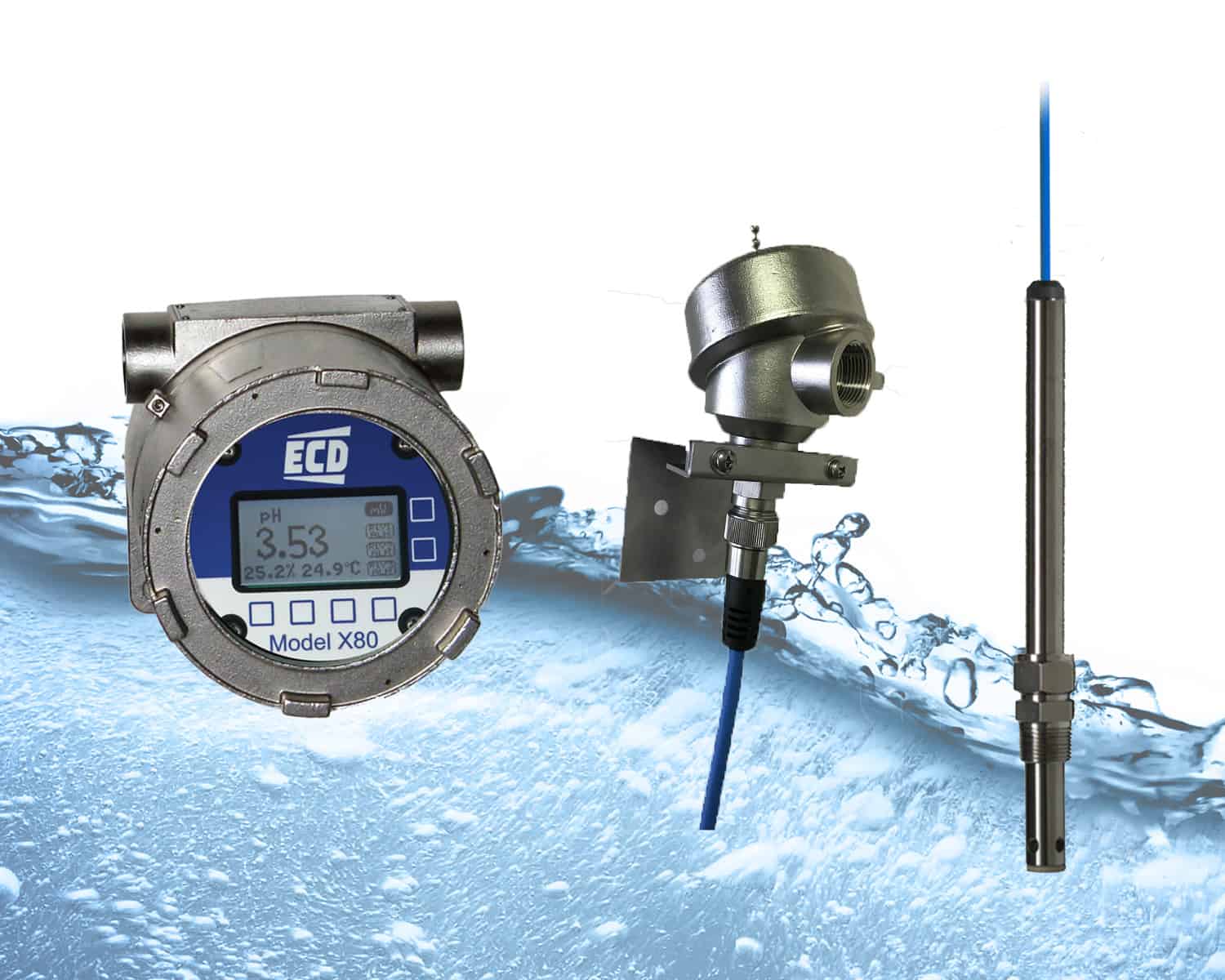
ECD Family of HYDRA-DS Analyzers Simplify Nitrogen (Nutrients) and Ammonium Measurement

Accurate Monitoring of Wastewater Treatment Effluent and Surface Water Storage
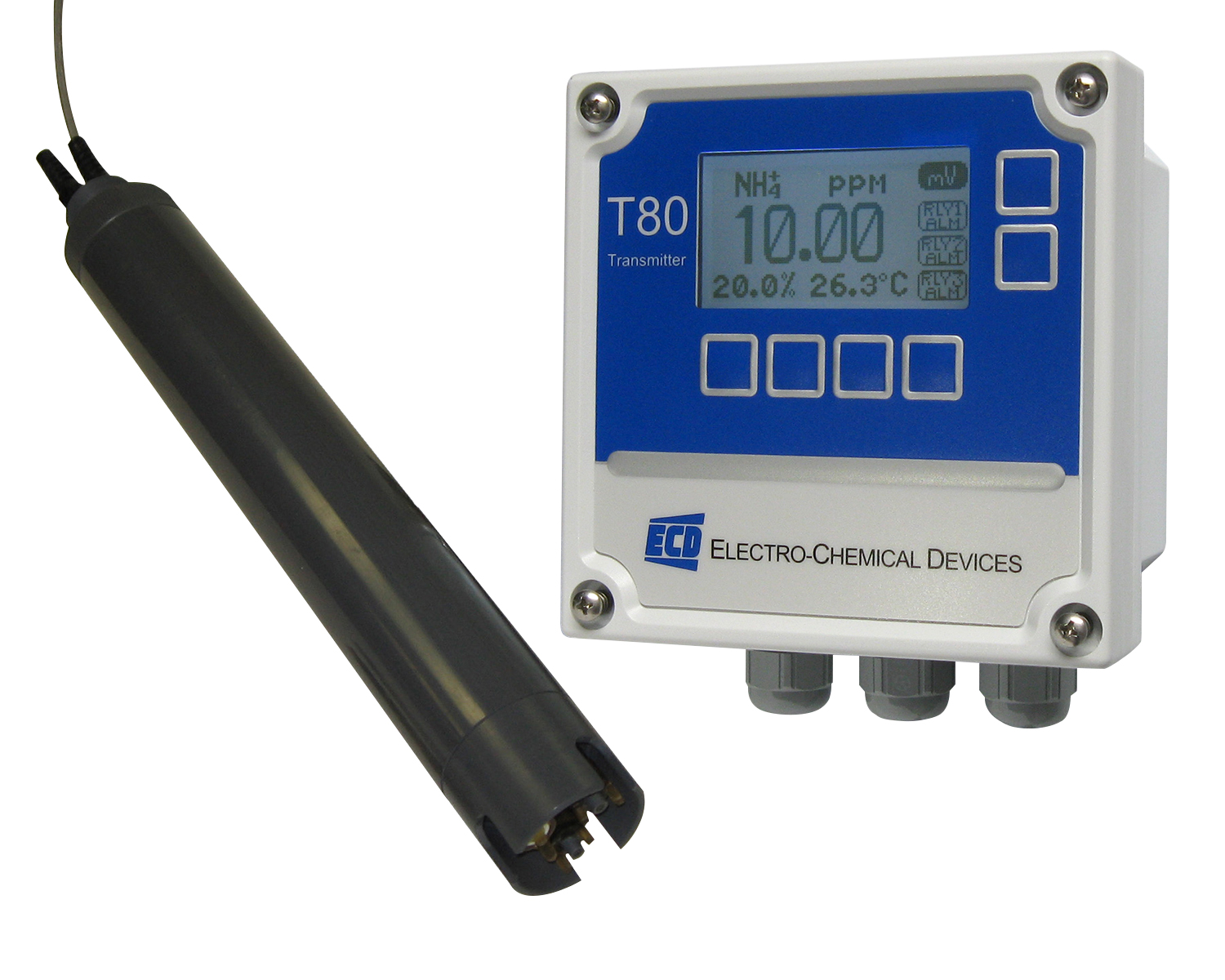
Anaheim, CA—September 26, 2019—Developed with advanced ion selective electrode (ISE) sensor technology and a highly intelligent transmitter, the family of HYDRA-DS Analyzers from Electro-Chemical Devices (ECD) simplifies the accurate measurement of harmful nitrogen (nutrients) and ammonium to maintain water quality in a wide range of environments.

HYDRA-DS Nitrate Analyzers

The HYDRA-DS Nitrate Analyzers are designed to monitor the nitrification process directly in a wastewater treatment plant’s aeration basin or clarifier unit. Its advanced sensor uses ISE technology to measure the Nitrate. Also featuring a self-compensating design, the HYDRA DS automatically eliminates Chloride ion interference for high accuracy and reliability.

The HYDRA-DS Nitrate Analyzers measure the concentration of dissolved nitrate as nitrogen (NO3-N) in water. The sensor uses two electrodes to determine the NO3-N concentration, a nitrate ion electrode and a chloride ion electrode. It is designed for use in all kinds of water ranging from municipal and industrial wastewater treatment.

For example, nitrogen typically enters a municipal wastewater treatment plant as ammonia/ammonium compounds. Nitrification oxidizes the toxic ammonium ion into a much less toxic nitrate ion using an aerobic activated sludge process. De-nitrification reduces the nitrate ion (NO3) to nitrogen gas (N2) by an anoxic reaction in the same treatment basin or in a separate anaerobic digester. The NO3-N measurement can optimize the methanol being fed to the digester, minimizing cost, and also provides a trend of the total nitrogen in the effluent.

The nitrate ion electrode performs the primary measurement. A second electrode measures the chloride ions in the sample. The chloride ion, because of its similar size and charge to the nitrate ion, causes a positive interference in the measurement. The chloride ion electrode measures the amount of chloride ion present in the sample and the intelligent transmitter subtracts the appropriate amount of signal from the nitrate measurement.

The HYDRA-DS sensor rapidly measures NO3-N and NH4-N from 0.1 to 14,000 ppm with a response time of 1 minute (T90) and an accuracy of ±3% of reading, dependent on calibration.  It operates over a wide temperature range from 32 to 122°F (0 to 50°C).  Its highly intelligent transmitter includes an easy-to-read backlit display and comes with two 4-20mA outlets and three SPDT alarm relays.  An integral automated sensor spray cleaner reduces biofilms to enhance accuracy and reduce sensor maintenance.

HYDRA-DS Ammonium Analyzers

The HYDRA-DS Ammonium Analyzer is designed to monitor the nutrient load (NH4+) directly in the aeration basin of a wastewater treatment plant. Its powerful sensor uses ISE technology to measure the ammonium, potassium and pH levels. Its self-compensating design automatically compensates for the pH-dependent concentration equilibrium and potassium ion interference on the ammonium electrode.

The ammonium sensor measures the concentration of dissolved ammonium as nitrogen (NH4+-N) in water. The sensor uses three electrodes to determine the NH4+-N concentration, an ammonium ion electrode, a potassium ion electrode and a pH electrode. It is designed for use in all kinds of municipal wastewater or wherever ammonium is present in water.

The ammonium ion electrode performs the primary measurement. Any potassium ion in the sample, however, generates a positive interference in the measurement because of its similar size and charge to the ammonium ion.  The HYDRA-DS Analyzer’s highly intelligent transmitter self-compensates by adjusting the signal for this potassium interference and eliminates it from the measurement of ammonium for superior accuracy and reliability.

The ammonium ion electrode measures the ammonium ion (NH4+), not ammonia (NH3).  The ammonium ion and ammonia coexist in a pH dependent ratio in solution. The more acidic pH values favor the NH4+ and the more basic values favor dissolved ammonia gas, NH3. The pH electrode measures the pH level, and the transmitter calculates the total NH4+-N concentration based on the pH versus the NH4+ concentration profile stored in the instrument.

The HYDRA-DS Analyzer rapidly measures NH4+-N from 0.1 to 14,000 ppm with a response time of 1 minute (T90) and an accuracy of ±3% of reading, dependent on calibration. It also operates over a wide temperature range from 32 to 122°F (0 to 50°C).  Its intelligent transmitter also includes an easy-to-read backlit display and comes with two 4-20mA outlets and three SPDT alarm relays.  An integral automated sensor spray cleaner reduces biofilms to reduce sensor maintenance.


About Electro-Chemical Devices

Electro-Chemical Devices (ECD) is a manufacturer of liquid analytical process instrumentation. Founded in 1977, ECD has been in business for over 40 years and has built its industry leading reputation by its commitment to customers through this basic approach: Provide quality products, develop technical innovations and provide responsive, knowledgeable service.


ECD Company Contact: Eric Kim ● ECD Address:  1500 N. Kellogg Dr., Anaheim, CA 92807 USA

Web:  www.ecdi.com ● Email: sales@ecdi.com ● Tel: 800-729-1333 Tel: 714-695-0051 ● Fax: 714-695-0057
Cooling Tower Ozone Disinfection Systems Rely On Reagent-Less O3 Analyzer for Monitoring

Ideal for Rugged High Temperature Industrial Evaporative Cooling Processes: Chemical Plants, Electric Power, Oil/Gas Refining, Pulp/Paper and More

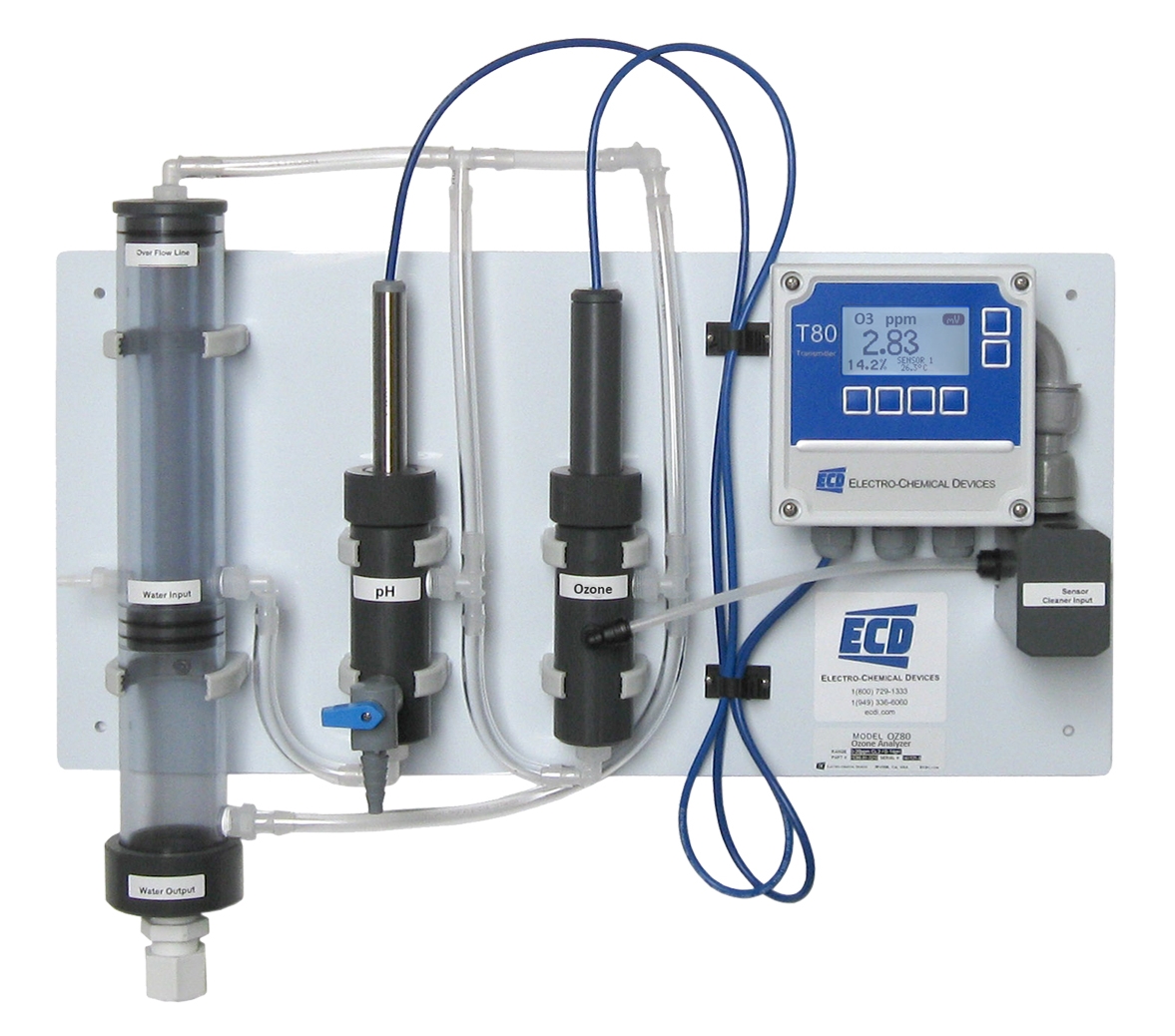
Irvine, CA—August 15, 2019—Plant engineers who’ve switched or who are thinking about the switch to Ozone (O3) disinfection of water for high-temperature evaporative cooling towers will find the reagent-less OZ80 Ozone Analyzer from Electro-Chemical Devices provides a green-friendly design that helps them optimize treatment while at the same time reducing cost, simplifying maintenance and avoiding complex environmental issues.

ECD’s advanced OZ80 Analyzer helps ensure effective ozone treatment of cooling tower water to prevent bacterial growth, scaling and corrosion.  Ozone as a disinfectant replaces the need for chlorine and other harsh biocides and inhibitor chemicals that are considered toxic hazards, require special wastewater treatment and effluent monitoring.

In comparison to reagent-type analyzers that come with multiple components which first must be installed and then require field calibration, the OZ80 Analyzer is factory assembled and factory calibrated prior to arrival.  All the technician needs to do is mount the panel and connect the drain lines, plug in the power cord and select the outputs on the display as 0 to 2.0 ppm for water disinfection or 0-20.00 pm for oxidation and bleaching operations.

Dual range measurement of both Ozone (O3) parameters also is available with the OZ80 Analyzer.  O3 is a colorless to pale blue gas that in low concentrations gives off an irritating acidic odor.  It is a strong oxidizer, stronger than either chlorine (Cl) or chlorine dioxide (ClO2).  O3 reacts quickly and disintegrates into oxygen gas without the formation of harmful disinfection byproducts (DPB’s) common to chlorine disinfectants that require additional costly treatment.  It also increases the amount of oxygen in the water.

O3 is gaining ground as a disinfectant and bleaching agent in multiple industrial processes.  It has been used for years in municipal drinking water and wastewater treatment plants.  It is useful at several points in the drinking water treatment process as an oxidizer for removing metals from well water as well as organics, odors and color from surface water too.

ECD’s OZ80 Analyzer features powerful amperometric sensors to detect and monitor O3 levels. These amperometric sensors are manufactured with a gold cathode, a silver anode and a rugged microporous membrane. Unlike many other analyzers, there are no reagents required with the OZ80 Analyzer.  Its O3 sensor technology and pH measurement are reagent-less designs. These sensors keep the cost of ownership low by not requiring expensive reagents.

The O3 sensors are smart sensors with their identity and calibration information stored internally. Communication between the OZ80 Analyzer’s T80 Transmitter and the O3 sensor is via MODBUS. The sensors are flow sensitive requiring a minimum flow rate of 0.5 ft/sec, above this flow rate, the reading is virtually independent of the flow rate.

The OZ80 Analyzer’s constant head flow control device (CFD) maintains the optimum flow rate moving past the sensor for sampling purposes.  The CFD’s automatic flow control capability eliminates the need for pressure regulators and rotameters, which are required by many other H2O2 analyzers, to reduce system maintenance and lifecycle operating costs.  The minimum flow rate required by the CFD is 10 gal/hr, and the maximum flow rate is 80 gal/hr with the sample draining at atmospheric pressure.

The OZ80 Analyzer is available with an optional sensor auto clean configuration.  The sensor auto clean features a solenoid actuated spray cleaner that provides either a 30 psi process water or air.  The spray cleaner removes films from the sensor head, which over time can affect measurement accuracy.  There is rarely a need for manual wiping of the sensor head by maintenance technicians with the spray clean configuration.

Designed with ECD’s T80 Universal Transmitter, the OZ80 Analyzer includes a 128-x-64 pixel (2.75-x-1.5-inch) display.  The display is black on grey with no backlight or blue on a white background with the LED backlight.  The standard configuration features two 4-20 mA outputs, three alarm relays and MODBUS RTU.  The enclosure is rated to IP65 and weatherproof.


About Electro-Chemical Devices

Electro-Chemical Devices (ECD) is a manufacturer of liquid analytical process instrumentation. Founded in 1977, ECD has been in business for over 40 years and has built its industry leading reputation by its commitment to customers through this basic approach: Provide quality products, develop technical innovations and provide responsive, knowledgeable service.


ECD Company Contact: Eric Kim ● ECD Address:  1500 N. Kellogg Dr., Anaheim, CA 92807 USA

Web:  www.ecdi.com ● Email: sales@ecdi.com ● Tel: 800-729-1333 Tel: 714-695-0051 ● Fax: 714-695-0057

Self-Cleaning Ultra Violet Family of Water Analyzers Ready to Go Right Out of the Box with No Reagents

Ideal for Drinking Water Disinfection and Wastewater Treatment

Anaheim, CA—July 24, 2019—With their advanced ultra violet absorption sensing technology, the new family of UV-6 Analyzers from Electro-Chemical Devices (ECD) helps treatment plant engineers and technicians assure the safety of surface and ground water supplies, drinking water disinfection and protect the environment from untreated wastewater effluent.

Relying on their sophisticated UV absorption correlation technology, the ECD UV-6 Analyzers are designed to monitor five separate parameters over a wide range of values.  They accurately measure via their spectroscopic sensor at a 254 nm wavelength with correlation algorithms the presence of ammonia, nitrate chemical oxygen demand (COD), biological oxygen (BOD) or total organic carbon (TOC).

The analyses of these pollutants are based on the measurement of UV absorption in a collected sample. Ammonia measurement is available in two ranges: either 0 to 10 ppm or 0 to 1000 ppm. Nitrate measurement is available in three ranges: 0 to 30 mg/L, 0 to 100 mg/L or 0 to 250 mg/L.  Measurement of COD, BOD and TOC is available in two ranges:  0 to 200 mg/L or 0 to 20,000 mg/L

The absorbance of the solution or gas is measured though a quartz flow cell at a specific wavelength using a long-life Xenon light source and photo-detectors. The absorbance is related to the sample concentration according to the Beer-Lambert Law, which relates the attenuation of light to the properties of the solution through which a projected light is traveling.

The UV-6 Analyzers come pre-calibrated from the ECD factory, which makes them easy to install and start up.  There’s no complicated assembly or calibration solutions, no special tooling needed or lengthy technician installation training.  Simply remove the analyzer from the packaging, connect the sample, waste and cleaning lines, plug-in and power up the unit.  Wall mounting hardware is provided standard, and an optional benchtop stand is also available.

This family of easy-to-use analyzers greatly reduces technician maintenance time and consumables expenses.  The design of the UV-6 features a built-in spray cleaning system that keeps the light source and sensor cell free from algae growth and sticky particles to ensure accuracy.  Best of all there are no costly reagents required, which also must be disposed of properly to prevent environmental contamination.

Data logging is provided via RS232 communications.  Four alarm relays are included, which are normally open, 5 Amp at 250 VAC, along with a single 4-20 mA output with 12-bit resolution.  Choose from multiple power supply options: 110-130 VAC or 220-240 VAC /30VA / 50-60Hz, or 12-15 VDC /4A.


About Electro-Chemical Devices

Electro-Chemical Devices (ECD) is a manufacturer of liquid analytical process instrumentation. Founded in 1977, ECD has been in business for over 40 years and has built its industry leading reputation by its commitment to customers through this basic approach: Provide quality products, develop technical innovations and provide responsive, knowledgeable service.


ECD Company Contact: Eric Kim ● ECD Address:  1500 N. Kellogg Dr., Anaheim, CA 92807 USA

Web:  www.ecdi.com ● Email: sales@ecdi.com ● Tel: 800-729-1333 Tel: 714-695-0051 ● Fax: 714-695-0057

New ECD Total Organic Carbon (TOC) NDIR Analyzer Assures Municipal & Industrial Water Quality

Municipal & Industrial Wastewater, Drinking Water, Power Generation and More

Anaheim, CA—August 23, 2018— Engineers responsible for municipal drinking water or industrial process water, as well as wastewater effluent, will discover that the new next-gen precision Total Organic Carbon (TOC) Analyzer from ECD Analyzers with non-dispersive infrared (NDIR) detection technology helps them know with high confidence that their treatment job is complete and that treated water is ready for use or re-use.

Installing ECD’s TOC Analyzer helps plants reduce costs, increases operational efficiency and supports regulatory compliance.  Organic matter is nearly always present in water, whether it is surface water, raw or treated water. Measuring total organic carbon, or TOC, can be an important process variable when monitoring and controlling organic matter in water.

There are many Industries and applications for ECD’s TOC Analyzer.  They include drinking water, feed and cooling water in manufacturing, runoff water and wastewater being discharged to the environment where an accurate and reliable TOC measurement is required to protect the water supply.

ECD’s TOC Analyzer is a full-featured instrument that utilizes the UV persulfate oxidation method, which detects generated carbon dioxide (CO2) using its highly stable NDIR detector for analysis.   This method and the analyzer conform to: US EPA, DIN, CE, ASTM and NAMUR regulations, as well as ISO.

Using the ECD TOC Analyzer is simple: the water sample is first acidified and then sparged to remove inorganic carbon.  The remaining liquid is mixed with sodium persulfate and digested by two high-performance reactors.  The resulting CO2 is then stripped from the liquid and, after drying, its concentration is measured by the NDIR analyzer. The analyzer measures TOC’s ranging from 0-5 mg/L to 20,000 mg/L.

The analyzer’s advanced design features a valve-free sample line, which largely eliminates blockages. The analyzer’s auto clean, autocalibration and autovalidation functions guarantee correct, reliable values that can be reproduced at any time without the need for manual intervention.

Unlike conventional analyzers where the flow is controlled by a glass tube rotameter, the carrier gas flow with the ECD TOC Analyzer is controlled digitally. The flow is monitored via built-in smart diagnostics and if an abnormal value is detected, the analyzer stops automatically and displays a warning alert.

The ECD TOC Analyzer is housed in a dual compartment enclosure.  The water sample components are in one compartment, and the electronics are located in a second compartment for safety and highly reliable operation.  The analyzer compartment is rated IP54, NEMA 3, and conforms to EN610004-2, EN610004-4, C46-022, EN 55022 and EN 61326.

The ECD TOC Analyzer features an optional fast loop reservoir for safe operation in case of a sample loss.  It maintains a constant sample flow and switches the analyzer to standby in the case of insufficient flow (dry running).  As soon as the sample flow restarts, the measurement is process is resumed.

Highly intuitive and simple to use, the ECD TOC Analyzer’s user interface is a touchscreen display located on the front of the analyzer.  All output/input data, status information, alarms and fault conditions are shown on the display.  Simply pressing the touchscreen buttons provides access to commands and settings.  The system is password protected for security.

Monitoring the TOC level of plant incoming source water will detect early pollution events and prompt action to be taken to divert or close the raw water intake before the treatment plant is contaminated. The monitoring of TOC content in finished water prior to distribution is also required in some countries to control disinfection by-products.

TOCs in municipal drinking water and wastewater are regulated by the US EPA, state and local water quality standards.  The same is true for industrial process wastewater effluent at plant discharge. Food/beverage, pharmaceutical and other industries rely on TOC measurement for analysis of wastewater prior to discharge. In addition, the power generation industries rely on TOC measurements for water quality concerning cooling water, condensate and boiler feed water.


About ECD Analyzers

ECD Analyzers is a subsidiary of Electro-Chemical  Devices, Inc., which is a manufacturer of liquid analytical process instrumentation. Founded in 1977, ECD has been in business for over 40 years and has built its industry leading reputation by its commitment to customers through this basic approach: Provide quality products, develop technical innovations and provide responsive, knowledgeable service.


Company Contact:  Ryan Balgos

Company Address: 1500 N. Kellogg Dr., Anaheim, CA 92807 USA

Web:    Email: sales@ecdi.com  Tel: 800-729-1333 Tel: 714-695-0051 Fax: 714-695-0057


New FM Approved Liquid Analyzer System Is Safe For Hazardous Area Duty

Ideal For Oil/Gas Production, Refining, Chemical, Electric Power,Wastewater Treatment & Other Demanding Industries

Anaheim, CA—November 26, 2018—With its sealed explosion-proof enclosure and intrinsically safe sensors, the rugged X80-B88-S88 Liquid Analyzer System from Electro Chemical Devices (ECD) now features FM approvals, making it safe for use in hazardous areas in support of the most demanding applications within oil/gas production sites, refining operations and storage terminals; chemical processing plants; electric power generation; fertilizer production and storage; and other industries.

Wherever potentially explosive or combustible combinations of gases, liquids and wastewater must be processed and/or treated, the newly FM approved X80-B88-S88 Analyzer System is ready to provide highly precise measurement of pH, ORP, DO, conductivity, resistivity or various specific ions.  The X80-B88-S88 Analyzer System features a NEMA 4X, IP66 sealed 316 stainless steel design that is FM approved.

The X80 Transmitter is approved for Class I, DIV 1, Groups B, C, D; T4 Ta = -40°C to +80°C; Class I, Zone 1, IIB+H2 T4 -40° to +85°C. The B88 Barrier is approved for Class I, DIV 1 Groups B, C, D; T5 Ta -40°C to +80°C; Class I, Zone 1 IIB+H2 T5 -40°C to +80°C. The versatile S88 Sensor is intrinsically safe for Class I, DIV 1, Groups B, C, D; T5 Ta = -40°C to +80°C; Class I, Zone 0 IIB+H2 T5 -40°C to +80°C.

The petrochemical industries require liquid analysis of corrosive fluids, cooling water, rinse water and other process liquids to protect equipment, ensure quality production and for environmental compliance.  The  FM approved ECD X80-B88-S88 Analyzer is ideal for monitoring these fluids including: pH as an indicator of sour gas and in overhead crude;  pH, ORP, conductivity and chlorine in cooling tower operation; and pH, ORP, turbidity, DO and various pIONs in wastewater effluent. ECD also offers ATEX and IECEx certifications with other configurations of the X80-S80 Analyzer System.

ECD’s Model X80 Universal Transmitter is available as either a single- or a dual-channel instrument for continuous measurement with standard MODBUS or optional HART digital bus communications and three optional alarm relays.  With its advanced electronics, the modular X80 Transmitter communicates with any Model S88 Intelligent Sensor, automatically configuring the transmitter’s menus and display screens to the desired measurement parameter.

Designed with a rugged 316 stainless steel housing and large easy-to-read sealed display, the X80 Transmitter and ECD’s S88 Sensors eliminate the need to inventory multiple instruments. Each S88 Sensor contains a B88 Barrier comprising energy limiting devices to comply with FM hazardous location requirements. Connection between the X80 and B88 Barrier is accomplished using flameproof conduit and installation practices recognized by National, State, and local codes (NFP, NEC, etc.). The S88 Sensor connects to the B88 Barrier with a MiniFast Connector with tamper-proof lockout guard.

Highly intelligent, the S88 Sensor’s measurement parameter, its identity and serial number are all stored in the S88 Sensor’s memory along with calibration registers for parameter measurements.  These sensors are pre-calibrated at the factory, and so they’re ready to use right out of the box and can be immediately connected to the X80 Transmitters.  The rugged S88 Sensors are waterproof and submersible with all internal components epoxy encapsulated.

The S88 Sensors are the smart sensor choice for a wide variety of applications, including oil/gas production, petrochemical refining, electric power generation, water and wastewater treatment and more. The S88 Sensors feature two universal sensor designs: (1) insertion/submersion or (2) valve retractable with flared end to prevent blow out. The standard S88 Sensors have a rugged 0.75-inch O.D. 316 stainless steel body with a 10-foot (3 meter) cable or an optional waterproof detachable cable assembly.

The X80 Transmitter features a large (2.75-x-1.5 inch) easily viewable 128-x-64 pixel LCD display with three easily switchable main display screens for data, millivolt and graphics. The display comes with a gray background and black lettering for loop powered instruments or with a blue background and white lettering with LED backlighting on 24 Vdc powered instruments.


About Electro-Chemical Devices

Electro-Chemical Devices (ECD) is a manufacturer of liquid analytical process instrumentation. Founded in 1977, ECD has been in business for over 40 years and has built its industry leading reputation by its commitment to customers through this basic approach: Provide quality products, develop technical innovations and provide responsive, knowledgeable service.


Company Contact:  Ryan Balgos

Company Address:  1500 N. Kellogg Dr., Anaheim, CA 92807 USA

Web:    Email:  sales@ecdi.com

Tel: 800-729-1333 Tel: 714-695-0051   Fax: 714-695-0057

Copper Removal from Industrial Wastewater Relies On Precision S80-T80 Analyzer

Ideal for Metal Processes, Electroplating, Wiring Production, Electronic Devices & More

Anaheim, CA—October 24, 2018—Process engineers responsible for the removal of copper from industrial wastewater to meet environmental, health and safety regulations will find the S80-T80 Copper Analyzer from Electro-Chemical Devices (ECD) provides a dependable and low-cost solution for accurate measurement in wastewater treatment systems.

ECD’s advanced S80-T80 Copper Analyzer relies on its highly accurate S80 Cupric ion electrode sensor, which is a combination electrode with a copper sulfide (CuS) solid-state pressed crystal sensing element and a double junction reference electrode housed in a rugged Radel body.  The universal S80 Cupric sensor connects with ECD’s intelligent T80 Transmitter, featuring dual channel mix and match capabilities for the measurement of multiple parameters, such as Cu and pH or many other parameters.

Copper (Cu) is used in industrial processes and in the manufacture of many different types of products, including electrical wiring, electronic components and devices, metals plating and processing, motors, sensors and more.  There are several processes available to remove heavy metals such as Cu from wastewater, which involve technologies such as adsorption, anaerobic treatment, membrane filtration, cementation and electro-dialysis.

All of the copper abatement processes have one thing in common—they require the accurate measurement of Cu before effluent discharge into the water system. The treatment of Cu in wastewater is complicated by the fact that Cu is both necessary to the normal functioning of the human body at the right levels and also is toxic to the body at higher than normal levels.      For this reason, the U.S. Environmental Protection Agency (EPA) has set a Cu maximum contaminant level (MCL) of 1.3 mg/L. The symptoms of over-exposure to Cu in water can include severe nausea, vomiting, gastrointestinal issues, muscle pain, anemia, liver or kidney failure and even death.

The S80-T80 Copper Analyzer measures copper ions from 1.0 ppb to 6,300 ppm, auto-ranging its graphical display between the ppb, ppm and ppt scales.  The sampling response T90 time is 10 seconds.  The analyzer operates over a wide temperature range from 32 to 176°F (0 t0 80°C) at pressures range from 0 to 50 psig (0 to 3.5 barg).

ECD’s versatile S80 pH Sensors come in immersion or insertion package configurations that are designed with a 0.75-inch MNPT compression fitting as the process connection. This design employs a variable insertion length to accommodate installation in pipe tees, flow cells or through tank walls. The retractable configuration is designed with a 1-inch MNPT ball valve, a 1-x-0.75 inch reducer and a 0.75 inch MNPT compression fitting to provide the process connection.

The highly intelligent T80 Transmitter is available with single or dual channels designed for the continuous measurement of pIONs such as copper, or pH, ORP, dissolved oxygen, turbidity, conductivity or resistivity. The transmitter digitally communicates with any ECD universal S80 Sensor, automatically configuring the transmitter’s menus and display screens to the measured parameter. Highly reliable, the transmitter features a built-in signal conditioner for noise-free transmission of data to the plant’s control system.

The T80 Transmitter features a large (2.75-x-1.5 inch) easily viewable 128-x-64 pixel LCD display with three easily switchable main display screens for data, millivolt and graphics. The display comes with a gray background and black lettering for loop powered instruments or with a blue background and white lettering with LED backlighting on 24 Vdc powered instruments.


About Electro-Chemical Devices

Electro-Chemical Devices (ECD) is a manufacturer of liquid analytical process instrumentation. Founded in 1977, ECD has been in business for over 40 years and has built its industry leading reputation by its commitment to customers through this basic approach: Provide quality products, develop technical innovations and provide responsive, knowledgeable service.


Company Contact:  Ryan Balgos

Company Address: 1500 N. Kellogg Dr., Anaheim, CA 92807 USA

Web:    Email: sales@ecdi.com  Tel: 800-729-1333 Tel: 714-695-0051 Fax: 714-695-0057


Enviro-Tech features CA-6 Colorimetric Analyzer Series

Versatile colorimetric analyzer monitors phosphates or total phosphates for industrial and municipal wastewater treatment applications.

Designed with an advanced modular sensing element, the versatile CA-6 Colorimetric Analyser Series from Electro-Chemical Devices (ECD) gives users the option of choosing to measure either phosphates or total phosphates and other parameters over a wide range depending on their process requirements.

The measurement of phosphates and total phosphates is useful in a variety of industrial and municipal wastewater treatment applications. Phosphates and total phosphates are commonly measured before the release of treated wastewater effluent from power and chemical plants where they occur in boiler feed water and cooling water systems. In addition, they are measured in municipal drinking water and sewage treatment plants.

While phosphorus is naturally present in the environment and used in the fertilization of agricultural crops, it is a danger to the sensitive aquatic plants found in surface waters such as streams, rivers, ponds, lakes, etc. Phosphate pollution is a serious concern, and it is monitored by governmental authorities around the globe to protect plant life, animals and humans from the effects of over-exposure.

The CA-6 Colorimetric Analyser Series for phosphates and total phosphates from ECD helps wastewater treatment engineers to measure these parameters accurately and reliably. The CA-6 Series Analyser is an on-line sequential sampling type of analyser. It automatically samples, analyses and then processes results. The colorimetric method of water analysis relies on an LED light source and a heated colorimetric cell designed for measuring trace amounts of an analyte in the water, which is equivalent to the phosphate levels present.

The CA-6 Analyser measures phosphates and total phosphates over a wide range depending on the user’s application process requirements and the chosen sensor configuration type and size. The CA-6’s phosphate and total phosphate measurement ranges vary from trace ug/L levels to 2000 mg/L (0.01 to 2000 ppm) using the internal distribution mode. Accuracy of measurement is ±5 ppb or 5 percent, whichever is greater.

The CA-6 Analysers are easy to start up and use.  They come factory pre-calibrated right out of the box from ECD.  Technicians simply connect the sample, waste and reagent lines and then power up the device.  Wall-mounting hardware is standard, but an optional benchtop configuration also is available.  The standard model is recommended for indoor use and rated NEMA IP54 for dust and water ingress.  The operating temperature range of the CA-6 Analyser is 41 to 113°F (5 to 45°C).

The CA-6 Colorimetric Analyser is equipped with an easy-to-read graphic touchscreen interface showing measured values and status information. It provides users with easy access to highly intuitive menus and functions in multiple languages. There is an integrated data logger onboard with USB download capability for history tracking, documentation and regulatory compliance purposes.

The CA-6 is designed with two compartments that separate critical electronics from the wet process.  It includes all of the components required for the flowing, mixing and reaction stages of the sample and reagents. Numerous analysis configurations can be programmed, depending on accessories and of the number of micro pumps mounted in the liquids compartment.

The top section contains the electronics enclosure. It includes the main power supply, the controller PCB assembly and the touch screen interface.  Outputs provided with the CA-6 Analyzer include two 4-20 mA outputs for measured data, and it also includes a Modbus compatible RS485 RTU.  Four programmable SPDT relays are available to provide multiple alarm capabilities.

Highly cost-effective, the CA-6 Analyser for phosphates and total phosphates features an adjustable cycle time to minimize reagent usage and to lower maintenance requirements. Automatic validation, cleaning and calibration are standard features, which significantly reduce downtime and operator intervention while ensuring the most accurate results are obtained.


Read the full article here: Versatile colorimetric analyzer monitors phosphates or total phosphates for industrial and municipal wastewater treatment applications

Thomasnet Features CA-6 Colorimetric Analyzer Series Phosphates

Versatile CA-6 Colorimetric Analyzer Designed to Monitor Phosphates or Total Phosphates

Designed with an advanced modular sensing element, the versatile CA-6 Colorimetric Analyzer Series from Electro-Chemical Devices (ECD) gives users the option of choosing to measure either phosphates or total phosphates and other parameters over a wide range depending on their process requirements.

The measurement of phosphates and total phosphates is useful in a variety of industrial and municipal wastewater treatment applications. Phosphates and total phosphates are commonly measured before the release of treated wastewater effluent from power and chemical plants where they occur in boiler feed water and cooling water systems. In addition, they are measured in municipal drinking water and sewage treatment plants.

While phosphorus is naturally present in the environment and used in the fertilization of agricultural crops, it is a danger to the sensitive aquatic plants found in surface waters such as streams, rivers, ponds, lakes, etc. Phosphate pollution is a serious concern, and it is monitored by governmental authorities around the globe to protect plant life, animals and humans from the effects of over-exposure.

The CA-6 Colorimetric Analyzer Series for phosphates and total phosphates from ECD helps wastewater treatment engineers to measure these parameters accurately and reliably. The CA-6 Series Analyzer is an on-line sequential sampling type of analyzer. It automatically samples, analyzes and then processes results. The colorimetric method of water analysis relies on an LED light source and a heated colorimetric cell designed for measuring trace amounts of an analyte in the water, which is equivalent to the phosphate levels present.

Read the full article here: https://news.thomasnet.com/companystory/versatile-ca-6-colorimetric-analyzer-designed-to-monitor-phosphates-or-total-phosphates-40031638

AWE Magazine features CA900 Fluoride Analyzer

New CA900 Fluoride Analyser’s All-in-One Design Preconditions Sample for Reliable Measurement

With its all-in-one design, the versatile CA900 Analyzer from Electro-Chemical Devices (ECD) delivers continuous, accurate measurement of fluoride in aqueous solutions to support a wide range of municipal water and industrial plant process and effluent treatment applications.

The dependable CA900 Fluoride Analyzer’s unique all-in-one design eliminates the need for additional water sample pretreatment equipment, reducing installation complexity, maintenance tasks and lifecycle costs. This advanced design is based on ECD’s rugged industrial grade ion selective electrode measurement technology.

Fluoride (F–) is derived from common fluorine, which is naturally and widely found in the earth’s crust.  Low concentrations of fluoride also occur in sea water, rivers and rain.  It is well known as a municipal drinking water additive to promote dental health, as well as in tooth pastes, mouth washes and some medicines.  This useful chemical also has a variety of industrial uses including hydrofluoric acid, semiconductor etching, glass frosting and in the production of specialty materials such as Teflon, textiles and insecticides.

The CA900 Fluoride Analyzer’s mixing chamber contains fluoride ion electrodes and pH electrodes for measurement purposes. It features automated titration technology. A TISAB reagent is flowed to provide an ionic strength adjustment to the liquid sample, breaking down weak complexes formed with fluoride and other metals, such as aluminum or iron, prior to the actual fluoride concentration measurement.  A pH compensation technique is employed along with special algorithms to provide accurate fluoride measurement across multiple pH ranges.

With its rugged construction, the CA900 Fluoride Analyzer operates in challenging environments from 0 to 50°C (32 to 120°F).  It offers a wide measurement range from 0.1 to 200 mg/l (0.1 to 200 ppm).  Highly dependable, it features accuracy of ±100 ppb, or 5% of measurement, or whichever is greater and repeatability of ±2% for consistent measurement.

Read the full article here: https://www.aweimagazine.com/press-release/new-ca900-fluoride-analysers-all-in-one-design-preconditions-sample-for-reliable-measurement/

Enviro-Tech Features CA900 Analyser

New fluoride analyser’s all-in-one design preconditions sample for reliable measurement

With its all-in-one design, the versatile CA900 Analyser from Electro-Chemical Devices (ECD) delivers continuous, accurate measurement of fluoride in aqueous solutions to support a wide range of municipal water and industrial plant process and effluent treatment applications.

The dependable CA900 Fluoride Analyser’s unique all-in-one design eliminates the need for additional water sample pretreatment equipment, reducing installation complexity, maintenance tasks and lifecycle costs. This advanced design is based on ECD’s rugged industrial grade ion selective electrode measurement technology.

Fluoride (F-) is derived from common fluorine, which is naturally and widely found in the earth’s crust. Low concentrations of fluoride also occur in sea water, rivers and rain. It is well known as a municipal drinking water additive to promote dental health, as well as in tooth pastes, mouth washes and some medicines. This useful chemical also has a variety of industrial uses including hydrofluoric acid, semiconductor etching, glass frosting and in the production of specialty materials such as Teflon, textiles and insecticides.

The CA900 Fluoride Analyser’s mixing chamber contains fluoride ion electrodes and pH electrodes for measurement purposes. It features automated titration technology. A TISAB reagent is flowed to provide an ionic strength adjustment to the liquid sample, breaking down weak complexes formed with fluoride and other metals, such as aluminum or iron, prior to the actual fluoride concentration measurement. A pH compensation technique is employed along with special algorithms to provide accurate fluoride measurement across multiple pH ranges.

Read the full article here: https://www.envirotech-online.com/news/air-monitoring/6/ecd-analyzers/newnbspfluoride-analyserrsquos-all-in-one-design-preconditions-sample-for-reliable-measurement/50745