New Triton DO8 Sensor with Optical FQ Technology Enhances Accuracy, Reduces Maintenance & Cuts Cost

Ideal for Drinking Water, Surface Water Monitoring, AquaCulture Municipal Wastewater Treatment, Industrial Water Treatment.

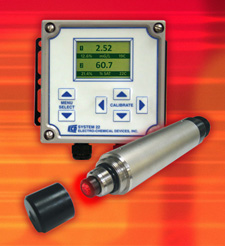
With a state-of-the-art fluorescence quenching (FQ) sensing element, the breakthrough Triton DO8 Dissolved Oxygen Sensor from Electro-Chemical Devices (ECD) delivers exceptionally accurate DO measurement with greatly reduced maintenance requirements for a low cost of ownership over a long service life in a wide range of municipal and industrial water treatment applications.

The trouble-free Triton DO8 Sensor is designed with precision FQ optical technology coupled with intelligent microprocessor-based electronics. The self-monitoring DO8 stores calibration data within the sensor, which minimizes maintenance over long service intervals while providing stable, dependable DO measurement.

The highly accurate Triton DO8 Sensor features a maximum error rate of less than 2 percent, repeatability of ±0.5 percent and resolution of 0.01 ppm or 0.01 percent saturation. It operates over a wide measurement range with three different outputs from 0 to 20 mg/l (0-20 ppm), 0-200 percent saturation or 0-500 hPa (0-6 psi).

Developed for rugged municipal and industrial water treatment environments, the tough Triton DO8 Sensor is designed to withstand ambient temperatures from -20 to 60°C (0-140°F) and records measurements at temperatures from -5 to 50°C (20-120°F). It withstands pressures up to a maximum of 10 bar (145 psi).

The Triton DO8 Sensor relies on a proven fluorescence quenching method to determine the oxygen concentration in water. A circular layer of optically-active, oxygen-sensitive molecules is integrated into an easily replaceable cap. This durable layer is highly permeable to oxygen and rapidly equilibrates to its surroundings. The cap aligns the optically-active fluorescence layer above two optical components inside the sensor—an emitter and a detector.

The sensor’s emitter flashes a green light at the layer and the layer fluoresces back a red light. The duration and intensity of the fluorescence are directly dependent on the amount of oxygen in the layer. With little to no oxygen in the layer, the response is longer and more intense. The presence of more oxygen, however, quenches (reduces) the fluorescence effect.

The Triton DO8 Sensor continuously analyzes the oxygen level, water temperature and air pressure to calculate dissolved oxygen values. Via digital communications, the DO8 sends DO data to ECD’s C-22 Controller, which provides a 4-20mA output signal to a water treatment plant’s control room. The RS-485 digital signal is nearly immune to common EMI/RFI noise that is typically a problem in many plant environments.

Unlike amperometric sensors, the Triton DO8 has no membranes to replace, no electrolytes to refill and no anode/cathode assemblies to service or replace. The only service required is the simple replacement of the DO8’s sensor cap, which lasts two years or longer, and the occasional wiping of the sensor head with a damp rag.
Next-Generation Steam Sterilizable Sensor Reduces Costs for Sanitary pH Measurement

Ideal For Sanitary Processes: Pharmaceutical, BioTech and Food / Beverage Large-Scale Production Vessels, Benchtop Reactors, and R&D Reactors

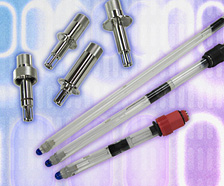
Process engineers who need to measure pH in sanitary liquid processes that require steam-in-place (SIP) or clean-in-place (CIP) operation will find the breakthrough SE Series Steam Sterilizable Electrodes and SF Series Fittings from Electro-Chemical Devices (ECD) deliver a long-life, lower- cost solution.

The advanced SE Series pH electrodes are 12 mm diameter, gel filled, sealed combination pH electrodes that are designed for use with ECD’s SF Series fittings. These exceptionally smooth-surface fittings are able to be cleaned/sterilized in accordance with EHEDG criteria (European Hygienic Equipment Design Group). They feature AISI 316L stainless steel wetted materials with a surface finish of Ra = 0.8 µm (optional Ra = 0.4 µm) and use FDA compliant O-ring seals.

The rugged SE Series pH electrodes and SF Series fittings are in-situ steam sterilizable or autoclavable. They support a wide range of fermentation and water treatment processes. The rigorous nature of many biotech, food / beverage and pharmaceutical fermentation processes when combined with SIP or CIP requirements dramatically shortens the life of conventional pH sensors.

The innovative SE Series pH electrodes solve this problem with their robust full span pH glass electrode and stable reference electrode, which can provide many months of reliable, precision measurement versus standard electrodes that may only last for a few cycles. The longer-life SE Series pH electrodes reduce the need for frequent sensor maintenance, saving technician labor and cutting replacement part expenses to lower overall plant production cost.

Various insertion lengths are available for the SE Series electrodes to meet the requirements of top entry and side entry reactors. Standard insertion lengths are 120, 225, 325 or 425 mm. Three detachable cable/connector cap styles are available. They include the VarioPin VP6, S8 or K8S, and the process connection for each connector is PG13.5. The highly flexible design of the SE Series electrodes allows them to be used in a wide range of applications from R&D pilot reactors to large scale production vessels.

The SF Series fitting features a triclamp and 25 mm port fittings. The 25mm port fitting is available with a standard 1.6 inch (42 mm) insertion length, common on most installations or a longer 2.4 inch (61 mm) insertion length that may be needed on some B. Braun vessels. Sanitary flange fittings are available in 1.5 inch, 2 inch and 3 inch diameters and various insertion depths.

For a complete analyzer system solution, the SE Series electrodes and SF Series fittings can be combined with ECD’s Model T23 and T28 Transmitters or with the C22 Multi-Channel Controller. They provide a highly accurate and reliable system for pH measurement.

Links of Interest
SE Series literature
pH Sensor Series product overview

Liquid Analytical Sensors & Electrodes Brochure Solves Tough Process Measurement Problems

Ideal For pH, ORP, Specific Ion, Dissolved Oxygen, Conductivity & Resistivity

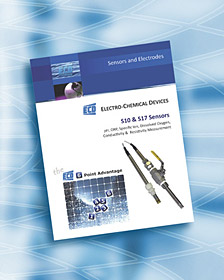
Engineers and technicians looking for a flexible, cost-effective solution to measuring a wide range of parameters in liquids will find the new S10 & S17 Analytical Sensors Brochure from Electro-Chemical Devices (ECD) provides advanced instrumentation to help them keep their processes operating smoothly and their plants running efficiently.

The ECD S10 & S17 Product Family consists of two unique sensor designs and replaceable electrode cartridges. The S10 Sensor is an immersion or an insertion style sensor, and the S17 is a valve retractable style sensor. They are fully re-buildable and feature a 316 stainless steel body that incorporates the sensing element, a temperature module and a signal conditioner with cabling.

For measurement purposes, the S10 and S17 Sensors both rely on ECD’s replaceable electrode cartridges to measure pH, ORP, specific ion (pION), dissolved oxygen, conductivity and resistivity. These cartridges provide specific solutions for the most demanding measurement requirements, and they are constructed in a variety of configurations and materials to support diverse industries.

The pH and ORP cartridges are available with either Radel (PES) or PEEK construction configurations with full crown, double or single tine style pH bulb protection. The pION cartridges are not limited to laboratory use and some are suitable for continuous online measurement. The DO electrode is a galvanic cell with a lead anode, silver cathode and Teflon® membrane. The conductivity and resistivity electrodes are designed in both contacting and toroidal sensor configurations for application flexibility.

New ECD S10 & S17 Analytical Sensor Brochure

S10 Immersion or Insertion Sensor
The S10 Sensor is designed with a 0.75-inch MNPT compression fitting as the process connection. This construction feature allows a variable insertion length to accommodate installation in pipe tees, flow cells or through tank walls. If the trunk fitting is reversed, the sensor can be installed in a pipe for submersion in a tank.

S17 Valve Retractable Sensors
The S17 Sensor is designed with a 1-inch MNPT ball valve, a 1-x-0.75 inch reducer and a 0.75 inch MNPT compression fitting to provide the process connection. Loosening the compression fitting allows the sensor to side freely through the ball valve for insertion either into the process or retraction from the process. Once the sensor is retracted, the ball valve can be closed and the sensor can be removed for maintenance or replacement without shutting down the process line.

Six Points of Design Flexibility
The ECD S10 & S17 Sensor Product Line features six points of design flexibility. These advanced design features help plant engineers configure the optimum sensor to provide precise measurement with low instrument life-cycle costs.

ECD’s sensors and electrodes measure multiple parameters in harsh fluids and environments with built-in signal conditioning for noise-free (accurate) measurement. The sensors come with various process fittings and insertion lengths, and the replaceable electrodes feature application specific cartridges that offer long life.

Links of Interest
S10 & S17 Analytical Sensors Brochure
pH Sensor Series product overview

Advanced Sensor Diagnostics Provide Predictive Maintenance Alert

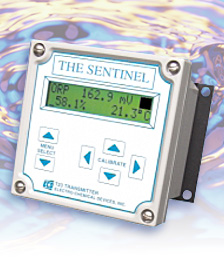
With built-in pre-pHault technology, the Sentinel Analytical Sensor / Transmitter System warns plant and maintenance engineers that a sensor’s reference electrode is failing, not failed yet, but failing. This allows sensor replacement prior to a measurement failure that could lead to unexpected process or plant shut-downs.

Many analytical sensors in critical processes must operate 24-7 without interruption to assure product quality, protect equipment and provide a safe operating environment. For this reason, process and plant engineers who need to measure pH, ORP and pION have heretofore found themselves replacing analytical sensors on a pre-set maintenance schedule whether the sensors needed to be replaced or not to prevent unnecessary line or plant shutdowns.

With ECD’s advanced Sentinel Analytical Sensor / Transmitter System, pre-pHault sensor technology alerts maintenances crews with an alarm signaled by the transmitter via a programmable controller indicating the need for future sensor replacement. This eliminates the need for automatic, scheduled sensor replacement, reducing spare part and technician labor costs. The savings over the lifetime of an analytical instrument can be a significant one.

The Sentinel’s En-Guarde (EG) cartridges or ECD’s standard (EG) electrodes feature Radel or PEEK construction, horizontal and inverted operation, process-compatible front junction chemistries and more. They are also designed with velocity-friendly self-cleaning profiles and integral, redundant O-Rings and fail-safe (backed-Up) Quad-Rings. Polymerized electrolytes maintain electrical path integrity between batch cycles.

The Sentinel’s sensors measure pH from -0.5 to 14.5 pH under operating temperatures from -15 to +130°C, operation pressures from vacuum to 100 psig (standard) or 300 psig (custom). The ORP measurement range is -1000 to +1000 milliVolts at pressures of 300 psig and at temperatures up to 130°C. Specific ion (pION) sensing is available for 11 different chemicals: bromide, calcium, chloride, copper, cyanide, fluoride, iodide, potassium, silver, sodium and sulfide.

T28 Transmitter Suitable For Hazardous Environments

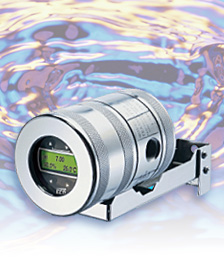
The highly intelligent Model T28 Transmitter designed for ECD’s innovative analytical instrumentation product line has received FM and CSA approvals. These approvals allow the Model T28 to be used in hazardous locations where combustible gases and vapors are potentially present and represent a safety hazard to people, equipment and facilities.

ECD’s Model T28 Transmitter is a sophisticated microprocessor-based, two-wire design that is intrinsically safe, explosion-proof and easy to use. The electronics are sealed and meet the requirements of FM Class I, II and III, Div 1, Groups A-G, making it suitable for application in a wide range of hazardous industries, including chemical, petrochemical, pharmaceuticals, and others.

The feature-rich Model T28 in combination with ECD’s popular universal S10 and S17 sensors represents a powerful analytical instrumentation system for the measurement of pH, ORP, specific Ion (pION), dissolved oxygen, conductivity or resistivity. The Model T28 features a versatile digital display with a 24-character supertwist alphanumeric LCD screen that displays operational and diagnostic menus. The LCD module can be rotated to accommodate viewing angles in a variety of installation mounting orientations. Contrast is adjustable for differing ambient light conditions. The main menu displays the process identification, variables (in engineering units), percent output and temperature.

ECD’s T28 transmitter is enclosed in a 300 series stainless steel housing that meets NEMA 7 requirements for rugged outdoor operating conditions. The enclosure incorporates sealed and isolated wiring and electronics compartments. A universal style mounting bracket allows for easy wall or pipe mounting.

Calibration and parameter selections are simply performed using a magnetic screwdriver accessed through the front viewing window. This approach eliminates the need to declassify the hazardous area during routine maintenance.

The 24 VDC loop powered Model T28 transmitter sends an isolated 4-20 mA current signal to a DCS, PLC, controller or recorder. The transmitter can be located up to 3 miles from the power source.

New ECD Product Catalog Now Available On CD

Process and plant engineers who need to measure pH, ORP, pION, DO, conductivity and resistivity will find the new ECD CD Catalog provides them with advanced instrumentation solutions, applications guidance and valuable installation tips.

ECD’s advanced liquid analytical instruments and sensors provide quick response, reliability, durability and extreme accuracy. Our unique design and architecture enhances repeatability and linearity, while maintaining immunity from noise generated by surrounding equipment.

The company manufactures a wide variety of liquid analytical products, including: Sensors, Transmitters, Controllers, and Portable Analyzers. Engineered Systems for Cooling Tower Control or Boiler Blowdown Control are available as well as user defined customized products. Their rugged design makes them suitable for a wide range of applications in corrosive, extreme temperature, explosive and other demanding conditions.

ECD’s analytical instruments and other measurement solutions are at work in many different industries, such as Biotech, Chemical, Food / Beverage, Metals/Mining, Oil / Gas Refining, Pharmaceutical, Pulp / Paper, Semiconductor and water / wastewater treatment. Wherever accurate measurement combined with applications flexibility and long-life are required, the company’s analytical instruments are frequently the industry’s choice based on their proven performance, reliability, ease-of-maintenance and low cost of ownership.