Fluoride Monitoring Solution

Versatile Fluoride Monitoring Solution For Semiconductor Fabrication Wastewater Treatment

Dual-Channel Transmitter Monitors Both Fluoride and pH for Reliable Accuracy

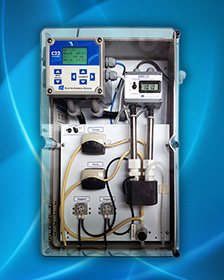
Electronics manufacturing engineers and plant technicians in need of a Fluoride measurement solution will find the new Fluoride Monitoring System from Electro-Chemical Devices (ECD) provides a highly accurate turn-key analyzer solution for semiconductor wastewater treatment processes.

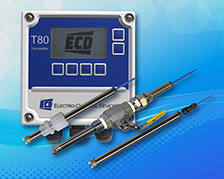
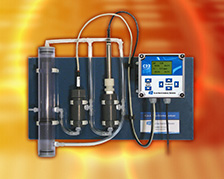
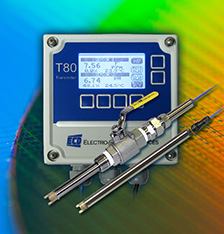
The next-generation Fluoride Monitoring System from ECD is designed with its new advanced dual-channel T80 Universal Transmitter and precision S80 Intelligent pION Sensor for Fluoride and S80 Intelligent pH Sensor. Together, they provide highly accurate and reliable measurement of Fluoride for electronics industry manufacturing plant wastewater treatment.

The T80 Transmitter provides dual-channel comparison of measurements or inputs, which can improve the accuracy of Fluoride measurement. For example, Fluoride ions are affected by changes in the pH of a solution. The correct measurement of Fluoride levels is only possible if pH is also measured and appropriate compensation algorithms are processed. The S80 pH Sensor and the dual-channel T80 Transmitter easily handles these types of measurement comparisons.

The efficient use of Fluoride is an important part of the semiconductor industry’s fabrication process. Effective etching of semiconductor wafers is dependent on Fluoride usage. Such processes produce wastewater and effluent contaminated with Fluoride, which must be accurately analyzed for effective treatment.

ECD’s S80 pION Sensor for Fluoride combined with the T80 Transmitter are well suited for this task. ECD’s S80 pION Sensor for Fluoride’s specific (pIon) electrode cartridge measures the activity of “free” Fluoride ions in solution in concentrations from 0.02 to 2,000 ppm over a pH range from 5-8 pH. They operate over a wide temperature range of 0 to 80º C. The S80 Immersion or Insertion Sensor is designed with a 0.75-inch MNPT compression fitting as the process connection and allows a variable insertion length to accommodate installation in pipe tees, flow cells or through tank walls. The S80 Retractable Sensor is designed with a 1-inch MNPT ball valve, a 1-x-0.75 inch reducer and a 0.75 inch MNPT compression fitting to provide the process connection.

In addition to Fluoride measurement, ECD’s replaceable electrode cartridges for the S80 pION Sensor for Fluoride can also be selected to measure parameters including other specific ions, pH, ORP, dissolved oxygen, conductivity and resistivity. These cartridges provide specific industrial process measurement solutions, and they are constructed in a variety of configurations and materials to support diverse industries.

releases_2014_dual_channel_t80

New Dual Channel T80 Universal Transmitter Independently Measures Two Liquid Process Parameters

Measure Any Two Channels Combining pH, Conductivity, Resistivity, ORP, Specific Ion, & Dissolved Oxygen

The popular new T80 Universal Transmitter from Electro-Chemical Devices, Inc. is now available with dual channel functionality, allowing process technicians to measure two of any seven popular liquid process parameters simultaneously with a single transmitter, eliminating the need to buy multiple transmitters and reducing the cost of process measurement.

The T80 Universal Transmitter features a highly intelligent digital transmitter protocol to simplify process measurement and reduce maintenance costs for seven common industrial plant parameters. Process measurement has never been easier or more affordable than with the T80’s virtually plug-and-play capabilities, which simplify daily operations and maintenance while reducing instrumentation costs simultaneously.

The ECD Model T80 Universal Transmitter is now available in a dual channel configuration. It designed for the continuous, simultaneous measurement of up to two parameters in a general-purpose industrial environment: pH, ORP, pION, Dissolved Oxygen, Turbidity, Conductivity or Resistivity.

The Model T80 digitally communicates with any ECD Model S80 Intelligent Sensor and automatically configures the transmitter’s menus and display screens to the measured parameter. The Model T80 automatically configures to any of the listed measurements so that there is no longer any need to inventory multiple instrument types, saving time and reducing plant operating costs.

Flexible and user-friendly, the T80 Universal Transmitter offers membrane switch navigation, a simple menu structure and soft key menu choices and an easy-to-read 2 ¾ -x- 1 ½ inch LCD display. The T80 accepts any S80 intelligent sensor or any standard pH sensor with solution ground using the optional T80 input card as an input. It is available with 4-20 mA output with MODBUS RTU on 24 VDC and 110/220 VAC instruments. The T80 can be configured with optional HART® 7 communication and an optional three alarm relay.

The Model T80 transmitter features digital communication with any Model S80 Intelligent Sensor, automatically uploading the sensors calibration data and configuring the transmitter’s menus and display screens to the parameter. Versatile Model S80 Sensors are the intelligent sensor choice for a wide variety of applications, available in the following parameters: pH, ORP, Specific Ion, Dissolved Oxygen, Conductivity & Resistivity. S80 Sensors feature two universal sensor designs, Insertion/Submersion or Valve Retractable with flared end to prevent blow out. The standard Model S80 sensors have a rugged ¾-inch O.D. 316 stainless steel body with a 10-foot cable or an optional waterproof detachable cable assembly.

The ECD six-point advantage makes S80 Sensors adaptable to most industrial applications. The intelligent sensors store calibration data, have a common configuration for all measurements, are economic with easily replaceable application specific electrode cartridges, in submersible and retractable designs with application specific materials of construction bring cutting edge versatility to ECD’s customers.

Self Cleaning Nitrate Analyzer System

Self-Cleaning HYDRA Nitrate Analyzer System For Water Quality

Sensor Spray Cleaner Ensures Measurement Accuracy In Dirty Environments

Offering a precision nitrate ISE electrode sensor with an integral self-cleaning sprayer, the new HYDRA Nitrate Analyzer System from Electro-Chemical Devices, Inc. (ECD), is ideal for nitrate monitoring in wastewater treatment aeration basins.

The HYDRA Nitrate Analyzer System monitors the nitrification process in aeration basins at wastewater treatment plants, a process during which toxic ammonium ions are oxidized into much less toxic nitrate ions using an aerobic activated sludge process. De-nitrification reduces the nitrate ion (NO3) to nitrogen gas (N2) by an anoxic reaction in the same treatment basin or in a separate anaerobic digester. The NO3N measurement helps optimize the methanol being fed to the digester, minimizing cost, and also to provide a trend indication of the total nitrogen (TN) in the effluent.

The intelligent HYDRA Nitrate Analyzer System measures the concentration of dissolved nitrate as nitrogen (NO3N) in water. The sensor uses two electrodes to determine the NO3N concentration: a nitrate ion electrode and a chloride ion electrode. An optional electrode is also available for pH or ammonium measurement.

The nitrate ion electrode provides the primary measurement. A second electrode measures the Chloride ions in the sample which interfere with the nitrate electrode. The HYDRA Analyzer subtracts the appropriate amount of signal from the nitrate measurement for accurate monitoring. The sensor also detects temperature, and the analyzer provides a temperature-compensation calculation for accurate measurement.

The rugged ECD HYDRA Analyzer nitrate sensor offers 1.25-inch NPT rear facing threads for attaching an extension/immersion tube for easy installation from catwalks or handrails. Internal signal conditioning allows the sensor to be mounted up to 200 meters from the analyzer. The sensor is extremely low-maintenance, featuring a movable electrode guard to facilitate easy electrode replacement when necessary.

Adding the optional AC10 Automatic Sensor Cleaner decreases HYDRA Analyzer sensor maintenance cycles and helps maintain sensor measurement accuracy in turbid water conditions by preventing the buildup of biofilms and other soft coatings. The AC10 cuts plant operating costs by reducing manual cleaning time and the amount of chemicals used for unnecessary water treatments performed due to inaccurate sensor readings caused by films and coatings that develop over time.

The AC10 can be used as either a Single Channel or Dual Channel System with the HYDRA Nitrate sensor. Combined with a Sensor Spray Head and a C22 Analyzer/Controller, it uses pressurized air to generate an area of high turbulence in the water surrounding the measurement end of the sensor.

The system’s HYDRA Analyzer is configured to periodically actuate a cleaning cycle using the integral spray cleaner in the nitrate sensor, minimizing the formation of biofilms or other coatings on the electrodes and keeping maintenance to a minimum. The cleaning cycles feature a user configurable period and duration. During the cleaning cycle the 4-20 mA output is held at either a preset value or the last value.

The AC10 Air Blast Spray Cleaner features a highly reliable high current contactor that assures years of trouble free service. It is available with either a 115 VAC 3.0 Amp or 220 VAC 1.3 Amp Air Compressor, housed in a rugged, corrosion resistant, fiberglass reinforced polyester enclosure. Installation options include wall mounting or an optional 2-inch handrail mounting system.

releases_2013_t80_s80_ac10

Specific Ion Sensor Measures Fluoride Accurately With Ease of Use and Simple Maintenance

Ideal for Fabrication of Semiconductors, Memory Chips and Other Electronic Components

Engineers and technicians in need of highly accurate Fluoride ion (F−) measurement will find the intelligent
S80 Fluoride Specific Ion Sensor from Electro-Chemical Devices (ECD) combines with the AC10 Self-Cleaning Module and the breakthrough Model T80 Universal Transmitter to form a complete Fluoride Ion Analyzer system, offering precise measurement while extending sensor life and reducing plant operating costs.

The usage of Fluoride and its accurate measurement is essential to the manufacture of semiconductors, memory chips and other electronic components, including the effective etching of semiconductor wafers. Such electronic component fabrication processes produce wastewater contaminated with Fluoride that must be accurately measured in order to be treated properly. The S80-AC10-T80 can be used as a Fluoride analyzer system wherever there is a manufacturing process need to monitor Fluoride levels in water, helping plants to operate more efficiently.

ECD’s Model S80 Intelligent Sensors are versatile, rugged and low-maintenance. They are available in two Universal Sensor Designs; Insertion/Submersion or Valve Retractable with flared end to prevent blowout. They feature long-life, replaceable electrode cartridges to lower operating costs and are available with multiple individual measurement parameters in the same mechanical configuration – pH, ORP, Dissolved Oxygen, Conductivity and Resistivity as well as Specific Ion.

S80 Sensors feature the ECD six-point advantage making them adaptable to most industrial applications. The standard Model S80 sensors have a rugged ¾-inch O.D. 316 stainless steel body with a 10-foot cable or an optional waterproof detachable cable assembly. The S80 Intelligent Fluoride Sensor measures Fluoride ions at concentrations from 0.02-2000 ppm at a temperature range of 0°-80°C and a pH range of 5-8 pH.

The ECD Model T80 Universal Transmitter features a highly intelligent digital transmitter protocol to simplify process measurement and reduce maintenance costs. The T80 is a single channel transmitter designed for the continuous measurement of multiple parameters in a general-purpose industrial environment that digitally communicates with any ECD Model S80 Intelligent Sensor and automatically configures the transmitter’s menus and display screens to the measured parameter. The Model T80 automatically configures to any of the listed measurements so that there is no longer a need to inventory multiple instrument types.

The AC10 is an Air Blast Spray Cleaner for Sensors that is available as either a single or dual channel system for use with the S80 and other ECD Sensor designs. It helps maintain sensor measurement accuracy in turbid water conditions by preventing the buildup of biofilms and other soft coatings, decreasing sensor maintenance cycles. The AC10 Air Blast Spray Cleaner reduces sensor cleaning time and the amount of chemicals used for unnecessary water treatments performed due to inaccurate sensor readings caused by films and coatings that develop over time on the sensors.

releases_2013_sms-22

All-In-One Sulfide Analyzer Helps Control Odor, Protects Equipment and Cuts Maintenance Cost

Ideal for Municipal Water Treatment, Wastewater Plants, Oil/Gas Refineries, Chemical Plants, Paper/Pulp and Tanneries

With its breakthrough all-in-one design the new
SMS-22 Sulfide Ion Measurement System from Electro-Chemical Devices, Inc., (ECD) can be quickly installed with no special tools, features user-selectable automated sequential sampling of sulfide ions in water and lowers plant technician and supply maintenance costs.

Hydrogen sulfide (H2S) is a gas that dissolves in water and gives it a “rotten egg” odor. H2S is present in well water, municipal wastewater and wastewater produced by refineries, tanneries, chemical plants, and paper and pulp facilities. It is typically formed in environments prone to the creation of septic conditions. In addition to odors, excessive concentrations of H2S in wastewater can lead to corrosion and structural damage to municipal water/waste infrastructure including equipment and piping.

The SMS-22 Sulfide Measurement System saves time and labor costs for municipal water operations by completing all the necessary steps to measure sulfide ions in a water sample. Because sulfide ions only exist at high pH values, this is a multi-step process. The SMS-22 conditions the sample, measures the sulfide, neutralizes the sample, measures the pH and drains and rinses the cell. After measurement, the highly caustic sample pH is reduced to a safe level near pH 8.

The ECD SMS-22 is a sequential sampling analyzer. Featuring automated sequential sampling, the Model C-22 Analyzer controls the sequential sampling with a combination of relays and timers. Sampling times are easily adjustable from 2 samples per hour to 10 samples per hour, and this economical system offers very low reagent consumption.

The SMS-22 Sulfide Ion Measurement System uses a sulfide ion selective electrode (ISE) to measure the total amount of sulfide present in the sample. ISE-based S-2 measurement provides a wide measurement ranges of 0 to 5 ppm and up to 500 ppm using economical, easily replaceable electrode cartridges. It features a measuring temperature range of -5 to 50°C (20° to 120°F), accuracy to ±20 ppb or 5 percent of reading, whichever is greater, and repeatability of ±2 percent of reading.

Easy to install and maintain, the SMS-22 features 4-20 mA outputs that display the total sulfide as well as the neutralized pH value. The output values are captured in the measurement cycle and displayed until the next measurement cycle. The rugged enclosure provides IP66 protection and is rated NEMA 4X. The base is made of gray hot-molded fiberglass-reinforced polyester and the cover is made of transparent polycarbonate with non-metallic hinges.

ECD Triton DO80 Optical Dissolved Oxygen Sensor

New Optical Triton DO80 Dissolved Oxygen Sensor Features Enhanced Accuracy, Years of Service

Ideal For Drinking Water, Surface Water Monitoring, AquaCulture Municipal Wastewater Treatment, Industrial Water Treatment

Featuring a state-of-the-art fluorescence quenching (FQ) sensing element, the advanced second-generation Triton DO80 Dissolved Oxygen Sensor from Electro-Chemical Devices (ECD) delivers exceptionally accurate DO measurement in a wide range of municipal and industrial water treatment applications and now offers an ultra long life membrane cap for years of service.

The newly enhanced Triton DO80 now features an ultra long life membrane cap with no annual replacement required or recommended. Its breakthrough FQ sensing element eliminates the need for frequent calibration or membrane replacement. The DO80 interfaces seamlessly with ECD’s new T80 Universal Transmitter for a versatile cost-saving measurement solution.

The highly reliable Triton DO80 Sensor is designed with precision FQ optical technology coupled with intelligent microprocessor-based electronics. The self-monitoring DO8 stores calibration data within the sensor, which minimizes maintenance over long service intervals while providing stable, dependable DO measurement.

Highly accurate, the Triton DO80 Sensor features a maximum error of less than 2 percent, repeatability of ±0.5 percent and resolution of 0.01 ppm or 0.01 percent saturation. It operates over a wide measurement range with three different outputs from 0 to 20 mg/l (0-20 ppm), 0-200 percent saturation or 0-400 hPa (0-6 psi).

The rugged Triton DO80 Sensor was developed for harsh municipal and industrial water treatment environments. It is designed to withstand ambient temperatures from -20 to 60°C (0-140°F) and measures at temperatures from -5 to 50°C (20-120°F). It withstands pressures up to 10 bar (145 psi).

The Triton DO80 Sensor relies on a proven fluorescence quenching method to determine the oxygen concentration of water. It features a circular layer of optically-active, oxygen-sensitive molecules integrated into an easily replaceable cap. This durable layer is highly permeable to oxygen and rapidly equilibrates to its surroundings. The cap aligns the optically-active fluorescence layer above the two optical components inside the sensor—the emitter and detector.

The sensor’s emitter flashes a green light at the layer and the layer fluoresces back a red light. The duration and intensity of the fluorescence are directly dependent on the amount of oxygen in the layer. With little to no oxygen in the layer, the response is longer and more intense. The presence of oxygen, however, quenches the fluorescence effect producing a less intense response of shorter duration.

The Triton DO80 Sensor continuously analyzes the oxygen level, water temperature and air pressure to calculate dissolved oxygen values. Via digital communications, the DO80 interfaces with the T80 Transmitter or ECD’s C-22 Controller. The T80 Transmitter offers 4-20 mA communications with MODBUS RTU or HART®; the C22 offers 4-20 mA, PID, relays, timers and logic gates to communicate with a water treatment plant’s control room. The RS-485 digital signal is nearly immune to common EMI/RFI noise that is typically a problem in many plant environments.

Unlike amperometric sensors, the Triton DO80 has no membranes to replace, no electrolytes to refill and no anode/cathode assemblies to service or replace. The only service required is the simple replacement of the DO80’s sensor cap, which lasts two years or longer, and the occasional wiping of the sensor head with a damp rag.

releases_2013_t80_s80_sentinel

Universal Analyzer Series with Predictive Maintenance Reduces Sensor Replacement Cost and Labor Time

Ideal for Virtually All Processes: Biotech & Pharmaceutical, Chemical, Food/Beverage, Industrial Wastewater, Municipal Drinking Water & Waste, Oil/Gas, Power Generation, Semiconductor

Process and plant engineers seeking a lower cost, lower maintenance solution for multiple analytical measurements will find the integration of advanced
SENTINEL predictive maintenance technology from Electro-Chemical Devices, Inc. into its new ModelT80 Universal Transmitter and S80 Intelligent Sensor series minimizes the cost and technician labor required to replace sensor electrodes.

Predictive maintenance is the best way to reduce the cost of maintaining analyzer sensor electrodes. ECD’s SENTINEL technology alerts maintenance technicians to sensor electrode wear so that sensor electrodes are replaced only as necessary. Sensor replacement costs and labor time are reduced to the optimum level, water quality remains constant and other related equipment and systems continue to perform at high levels.

SENTINEL technology from ECD allows the Model T80 Transmitter-S80 Sensor series to provide Pre-pHault diagnostic information about the lifetime of a pH, ORP or pIon measurement. The easy-to-read SENTINEL display graphically shows a filled triangular gauge that decreases proportionally to the degradation of the reference electrode. A filled gauge indicates a new electrode that is functioning properly while an empty gauge indicates an electrode near the end of its useable life. In addition to the graphics, the SENTINEL information is remotely transmitted by various user selected outputs providing an alert notification that the sensor electrode is nearing its useful life and will need replacement to avoid down time.

The plug-and-play Model T80 Universal Transmitter is a single channel transmitter designed for the continuous measurement of seven common industrial plant parameters that include: pH, ORP, pION, Dissolved Oxygen, Turbidity, Conductivity or Resistivity. The Model T80 digitally communicates with any ECD Model S80 Intelligent Sensor and automatically configures the transmitter’s menus and display screens to the measured parameter. The Model T80 automatically configures to any of the listed measurements so that there is no longer any need to inventory multiple instrument types, saving time and reducing plant operating costs.

The T80 Universal Transmitter is flexible and user-friendly. It offers membrane switch navigation, a simple menu structure and soft key menu choices and an easy-to-read 2 ¾ -x- 1 ½ inch LCD display. The T80 accepts any S80 intelligent sensor or any standard pH sensor with solution ground using the optional T80 input card as an input. It is available with 4-20 mA output with MODBUS RTU on 24 VDC and 110/220 VAC instruments. The T80 can be configured with optional HART® 7 communication and optional three alarm relays.

The Model T80 transmitter digitally communicates with any Model S80 Intelligent Sensor, automatically uploading the sensors calibration data and configuring the transmitter’s menus and display screens to the parameter. Versatile Model S80 Sensors are the intelligent sensor choice for a wide variety of applications, available in the following parameters: pH, ORP, Specific Ion, Dissolved Oxygen, Conductivity & Resistivity. S80 Sensors feature two universal sensor designs, Insertion/Submersion or Valve Retractable with flared end to prevent blow out. The standard Model S80 sensors have a rugged ¾-inch O.D. 316 stainless steel body with a 10-foot cable or an optional waterproof detachable cable assembly.

S80 Sensors feature the ECD six-point advantage making them adaptable to most industrial applications. The intelligent sensors store calibration data, have a common configuration for all measurements, are economic with easily replaceable application specific electrode cartridges, in submersible and retractable designs with application specific materials of construction bring cutting edge versatility to ECD’s customers.

releases_2013_t80_s80

New Universal Transmitter Delivers Several Analytical Measurements Simply and Economically

Ideal for Virtually All Processes: Biotech & Pharmaceutical, Chemical, Food/Beverage, Industrial Wastewater, Municipal Drinking Water & Waste, Oil/Gas, Power Generation, Semiconductor

Process and plant engineers in search of a powerful process analyzer for multiple analytical measurements will find the breakthrough Model T80 Universal Transmitter from Electro-Chemical Devices, Inc. provides a versatile, easy-to-use, economical solution for virtually all liquid analytical measurements.

Featuring a highly intelligent digital transmitter protocol, the T80 Universal Transmitter simplifies process measurement and reduces maintenance costs for seven common industrial plant parameters. Process measurement has never been easier or more affordable than with the T80’s virtually plug-and-play capabilities, which simplify daily operations and maintenance while reducing instrumentation costs simultaneously.

The ECD Model T80 Universal Transmitter is a single channel transmitter designed for the continuous measurement of multiple parameters in a general-purpose industrial environment: pH, ORP, pION, Dissolved Oxygen, Turbidity, Conductivity or Resistivity. The Model T80 digitally communicates with any ECD Model S80 Intelligent Sensor and automatically configures the transmitter’s menus and display screens to the measured parameter. The Model T80 automatically configures to any of the listed measurements so that there is no longer any need to inventory multiple instrument types, saving time and reducing plant operating costs.

The T80 Universal Transmitter is flexible and user-friendly. It offers membrane switch navigation, a simple menu structure and soft key menu choices and an easy-to-read 2 ¾ -x- 1 ½ inch LCD display. The T80 accepts any S80 intelligent sensor or any standard pH, ORP or pION sensor with solution ground using the optional T80 input card. It is available with 4-20 mA output with MODBUS RTU on 24 VDC and 110/220 VAC instruments. The T80 can be configured with optional HART® 7 communication and an optional three alarm relay.

The Model T80 transmitter digitally communicates with any Model S80 Intelligent Sensor, automatically uploading the sensor’s calibration data and configuring the transmitter’s menus and display screens to the parameter. Versatile Model S80 Sensors are the intelligent sensor choice for a wide variety of applications, available in the following parameters: pH, ORP, Specific Ion, Dissolved Oxygen, Conductivity & Resistivity. S80 Sensors feature two universal sensor designs, Insertion/Submersion or Valve Retractable with flared end to prevent blow out. The standard Model S80 sensors have a rugged ¾-inch O.D. 316 stainless steel body with a 10-foot cable or an optional waterproof detachable cable assembly. S80 Sensors feature the ECD six-point advantage making them adaptable to most industrial applications.

The S80 intelligent sensors store calibration data and have a common configuration for all measurements. They are economic with easily replaceable, application specific electrode cartridges, in submersible and retractable designs with application specific materials of construction, to bring cutting edge versatility to ECD’s customers.

releases_2012_cda_22

Plumb-and-Play Chlorine Dioxide Analyzer For Raw Water Treatment Reduces Maintenance Costs

Ideal for Freshwater Treatment Plant Filtration Systems

The low maintenance, economical CDA-22 Chlorine Dioxide Analyzer from Electro-Chemical Devices, Inc. (ECD) is ideal for supporting raw water treatment filtration systems. Featuring a panel mounted plumb-and-play design and automatic flow control, the user-friendly CDA-22 is a complete Chlorine Dioxide (ClO2) measurement system.

Treating raw water with ClO2 is an important part of the water purification process. ClO2 is used at very low concentrations (<1 ppm) in filtration systems to precipitate manganese, iron and other minerals in raw water and to break up tannins, which discolor the water often giving it a red hue. Inaccurate ClO2 monitoring may allow levels to exceed acceptable limits, leading to the generation of toxic chlorates.

Raw water sources vary in quality depending on their geographic location, the source type such as natural lake or reservoir, river or canal, etc. Depending on many factors, the level of manganese, iron and tannins varies from source to source. Removing the manganese, iron and tannins helps clarify the water. The CDA-22 Chlorine Dioxide Analyzer ensures that ClO2 levels are properly maintained as part of the water source filtration system, preserving safety and water quality.

Easy to install and maintain, the CDA-22 Chlorine Dioxide Analyzer can run for up to one year between electrolyte/membrane changes. It incorporates a CIO2 sensor, automated flow control device and analyzer/controller mounted on a PVC panel. Installation is complete after connecting the sample and drain lines, power and outputs, and calibration is accomplished with DPD comparison.

The CDA-22 features a polarographic gold/silver PTFE membrane amperometric CIO2 sensor. While these types of sensors are flow sensitive, the CDA-22’s output is virtually flow independent at values greater than 0.5 ft/sec. The CDA-22’s “constant head” flow control device maintains the sensor’s optimum flow over a wide range of
incoming sample flow rates, from 10-80 gal/hr.

The CDA-22’s sensor operates at a wide temperature range of 0 to 100ºC (32 to 212°F). Because temperature affects the CIO2 permeability of the PTFE membrane, increasing the temperature increases the output of the sensor about 4% per C°. The chlorine flow cell includes a temperature sensor that allows the C22 analyzer to perform automatic temperature compensation of the measurement.

The CDA-22 features a 2.5-x1.75-inch backlit LCD display, with 4 lines for text and graphics. It requires no expensive reagents and eliminates pressure regulators and rotometers. The CDA-22 offers dual measurements, an XY graphical plot and an optional PID Control Output. The analyzer provides a 4-20 mA output proportional to the Chlorine Dioxide measured and two alarm relays SPDT 230 VAC/5A or 30 VDC/5A resistive max. It features the options to include additional 4-20 mA outputs for pH or temperature and up to 6 additional relays.

releases_2012_tr8_filter_backwash

Triton TR8 Turbidity Analyzer With Intelligent Sensor Technology Optimizes Water Filter Backwash Monitoring

Ideal for the Activated Sludge Process, Return & Waste Activated Sludge, Paper Manufacturing Filtrate, Blending/Mixing Applications, Environmental Runoff

Engineers in charge of drinking water treatment plants will want to learn more about the precise, low-maintenance Triton TR8 Turbidity Analyzer from Electro-Chemical Devices (ECD), ideal for monitoring turbidity in filter backwashing systems to optimize plant efficiency.

Filter backwashing is a critical part of the drinking water production process. During backwashing, water flow is reversed and increased in order to flush out debris and particles. Turbidity is used to monitor the progress of the cleaning, and when the turbidity returns to a value near the turbidity of the clear well water the backwash cycle is stopped. Backwashing cleans the filter to preserve water quality and also extends the life of the filter; however, backwashing too frequently can lead to degraded filter performance. Accurately measuring the turbidity of the water coming out of the filter is the best way to determine when backwashing should occur, optimizing drinking water plant performance and minimizing operating costs.

The Triton TR8 Clear Water Sensor is ideal for all phases of drinking water processing including filter backwash. The highly accurate Triton TR8 TA operates over wide measurement range with output available in multiple units: 0.000 to 9999 FNU, or 0.00 to 3000 ppm, or 0.0 to 3.0 g/l, or 0 to 20 percent. The TR8 TA sensor features an error rate of less than 5 percent of reading with repeatability greater than 1% percent of reading.

The Triton TR8’s sensor features a unique multi-path optical assembly. The first pathway is inside the sensor to a reference detector that compensates for changes in the LED light source caused by aging or other variables. The second pathway has a short path length through the sample, which is best for high concentration measurements. The third pathway has a longer path length, which is best for lower concentrations.

The Triton TR8 utilizes a highly intelligent microprocessor-based design. Its sensor electronics constantly adjusts suspended solids and turbidity signal readings versus the reference detector for superior measurement accuracy. A built-in digital filter helps to suppress potentially interfering signals while self-monitoring diagnostics assure high reliability.

The Triton TR8’s sensor assembly relies on a long-life near infrared LED light source (880 nm), and the 90-degree scattered light method in accordance with ISO 7027 / EN 27027. The sensor is factory calibrated in formazine, FNU (Formazine Nephelometric Units), and is plug-and-play ready for applications. Two nonvolatile memory banks are also available onboard to store user-initiated calibration data.

Featuring an inclined face that is oriented into the liquid flow for optimum self-cleaning, the rugged Triton TR8’s sensor assembly greatly reduces plant maintenance requirements to the occasional manual sensor swiping with a soft cloth. An optional automated mechanical wiper also is available for heavy-duty service environments or for difficult-to-reach sensor locations.
The Triton TR8’s sensor was developed for rugged water treatment environments, designed to operate at ambient temperatures from -5 to 50°C (20-120°F). It withstands pressures up to a maximum of 6 bar at 25°C and 1 bar at 50°C.

The TR8’s transmitter digitally communicates with the turbidity sensor and provides a 4-20 mA output and alarm relay. The TR8’s controller features ECD’s multi-bus architecture, with up to 2 outputs and 4 SPDT relays. It includes a configurable display and HART protocol communication is available as well. The turbidity sensor can be located up to 200 m away from the controller.